
7 Top Executive Outreach Mistakes That Cost Deals
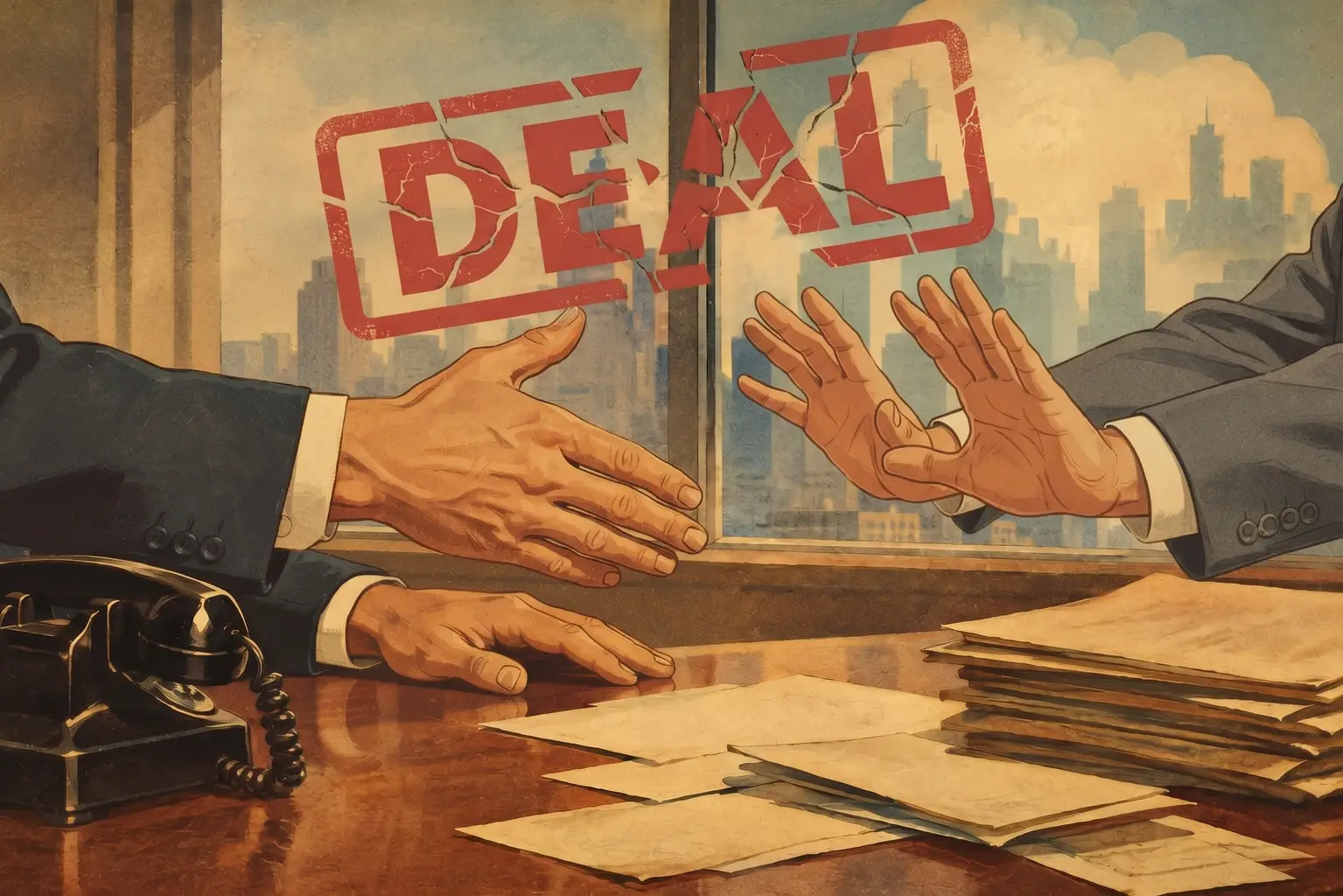
A CEO does not ignore your outreach because their inbox is too full. They ignore it because, within seconds, it reads like every other vendor message competing for attention. The top executive outreach mistakes are rarely dramatic. They are small positioning, targeting, and execution failures that signal you have not earned the right to ask for a conversation.
For a consultant, advisor, coach, or boutique firm selling five-figure engagements, that failure is expensive. One poorly framed message can close a door with an account you spent months trying to reach. A disciplined outbound system protects your reputation while creating qualified conversations with buyers who can actually approve a serious engagement.
The Top Executive Outreach Mistakes That Undermine Authority
1. Targeting job titles instead of commercial situations
"CEO," "CHRO," and "VP of Sales" are not ideal client profiles. They are labels. A senior title tells you who may have authority, but it does not tell you whether the person has a relevant priority, an active business problem, or a reason to change course now.
This is how campaigns become broad, bland, and wasteful. A leadership consultant may target every HR leader at companies above a certain size, while ignoring the distinction between a stable organization and one navigating rapid growth, a merger, a leadership transition, or persistent attrition. The same offer lands very differently in each situation.
Build your audience around conditions, not just demographics. Define the account type, business trigger, likely pain, buying committee, and proof points that make your offer credible. Precision reduces list volume, but it raises the odds that every message has a legitimate reason to exist.
2. Leading with your credentials instead of their business exposure
Senior buyers do not need a biography in their inbox. They need to know whether you understand a costly issue in their world and whether your perspective is worth examining.
Credentials matter after relevance is established. Starting with "I have 20 years of experience" or "we help companies like yours" forces the prospect to do the work of connecting your background to their priorities. Most will not.
A stronger opening identifies a specific business exposure: stalled enterprise sales velocity, inconsistent leadership bench strength, a costly client-retention gap, or a post-acquisition operating problem. Then connect that exposure to a concise observation and a credible outcome. Your expertise should support the point, not replace it.
There is a trade-off here. Overly aggressive problem statements can sound presumptuous when your research is thin. Do not claim to know what is happening inside an organization. Use evidence available from the market, company activity, hiring patterns, strategic announcements, or industry conditions to frame a relevant hypothesis.
3. Mistaking personalization for superficial flattery
Mentioning a recent LinkedIn post, company anniversary, or press release does not automatically make an email personal. When the observation has no relationship to the offer, it reads as a template with a decorative first line.
Executives see this constantly: "Congratulations on your recent expansion. We help businesses grow." The sender noticed something, but contributed nothing. That is not research-first personalization. It is a signal that the message was generated at scale.
Useful personalization creates a bridge between what is happening at the account and the commercial issue you solve. If a firm has expanded into a new market, for example, the relevant question might concern sales enablement, leadership capacity, client onboarding, or operational consistency. The point is not to prove you read the news. The point is to demonstrate judgment.
Keep it restrained. One well-supported detail is more credible than three loosely connected facts. Premium outreach should feel like a thoughtful peer-to-peer note, not an intelligence report assembled to impress the recipient.
4. Asking for too much in the first message
A request for 30 minutes, a full discovery call, a demo, and a calendar link can feel like an immediate transfer of risk from seller to buyer. You are asking an executive to invest time before you have established enough value to justify it.
The first outreach message needs a low-friction next step. Depending on the offer and account, that may be a brief question, permission to send a relevant point of view, or a concise invitation to compare notes on a defined issue. The goal is not to hide your sales intent. It is to make the decision easy.
That does not mean being vague. "Would you be open to connecting sometime?" creates no compelling reason to respond. Be direct about the topic, the potential outcome, and why the conversation is relevant now. Specificity earns attention; pressure destroys it.
5. Sending executive-level messaging from weak infrastructure
Even excellent copy fails if it lands in spam, arrives from an unfamiliar domain with no sending reputation, or comes from an address that looks disposable. Deliverability is not a back-office detail. It is part of brand protection.
High-value outreach needs dedicated sending infrastructure, controlled ramp-up, authenticated domains, sensible sending volume, clean data, and continuous monitoring. A campaign that sends too aggressively may produce a short-term spike in activity, but it can damage domain health and make future outreach harder.
The same discipline applies to your contact data. Reaching a former executive, an irrelevant department head, or an address that bounces signals operational carelessness. Before a message reaches a buyer, the underlying system should be accurate enough to protect both your reputation and your ability to deliver.
6. Treating follow-up as repetition
Most outreach does not fail because the first email was ignored. It fails because the follow-up adds no new reason to engage. Repeating "Just following up" tells a senior buyer that the sender has no additional insight and is simply trying to force a response.
Every follow-up should advance the conversation. You might introduce a sharper observation, clarify the cost of leaving an issue unaddressed, share a relevant pattern you are seeing in the market, or narrow the ask. The buyer should gain context even if they never reply.
Cadence matters. A fast sequence can be appropriate when there is a clear time-sensitive trigger, such as a leadership change or major strategic initiative. In most professional-service sales, however, persistence should feel measured. You are building familiarity and relevance, not chasing a transaction through someone else's inbox.
7. Measuring activity instead of qualified opportunities
Open rates, total sends, and raw reply volume can make an outreach program look productive while producing no pipeline. A campaign that generates many polite responses from companies that cannot buy is not working. It is consuming time and creating false confidence.
The meaningful measures are closer to revenue: positive replies from ideal accounts, qualified consultations booked, show rates, opportunity creation, and progression toward closed business. Review results by segment, message angle, title, industry, trigger event, and channel. This is where optimization becomes commercially useful.
A low reply rate is not always a failure. If a narrowly targeted campaign produces fewer responses but more conversations with real decision-makers, it may outperform a broad campaign by a wide margin. Volume is only valuable when it leads to access to the right buyers.
Build Outreach Like a Reputation Asset
Executive outreach should operate like senior business development, supported by disciplined systems. That means defining the ideal client before list building, researching accounts before writing, protecting deliverability before scaling, and judging performance by qualified consultation quality rather than vanity metrics.
Automation has a role, but it should handle the operational burden, not replace judgment. Use it to organize data, maintain cadence, coordinate multichannel touches, and surface performance patterns. Keep human thinking at the center of account selection, message strategy, and response handling.
The standard is simple: if a prospect forwarded your message to another executive, would it make you look like a credible specialist with a relevant point of view? Build every campaign to pass that test. It will naturally eliminate the shortcuts that create short-term activity and long-term brand risk.